Infrastructure

In-House Valve Casting Foundry

From the first melt to the finished casting, the metal inside every FLOEC valve is made and checked under our own roof.

  • Induction melting
  • Heat-wise traceability
  • Carbon to super duplex grades

Core Capabilities

Foundry Capabilities

Casting quality decides how a valve body holds pressure for decades. Running our own foundry means every stage — melting, moulding, heat treatment, testing and finishing — is planned around the needs of the valves we build.
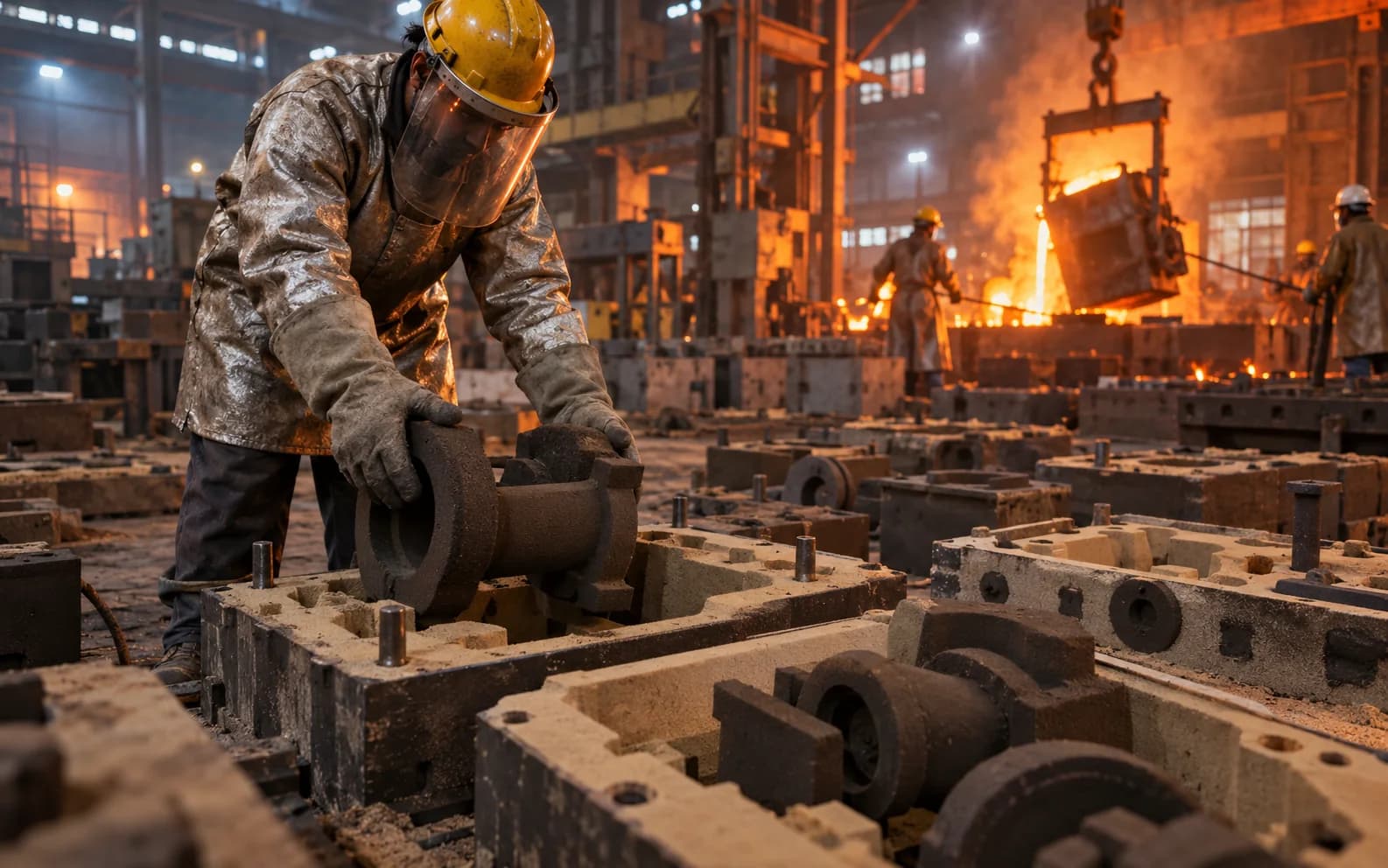
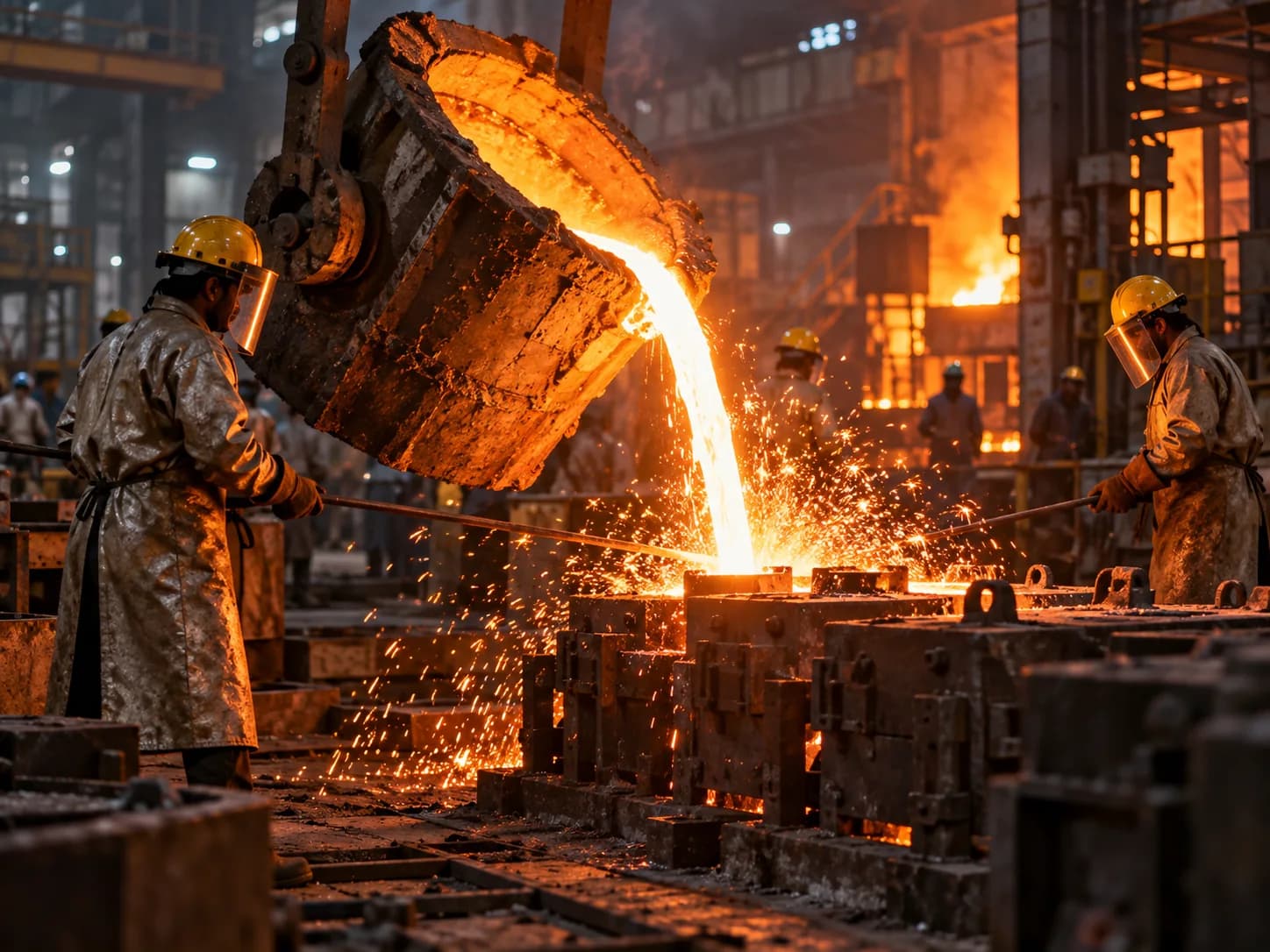
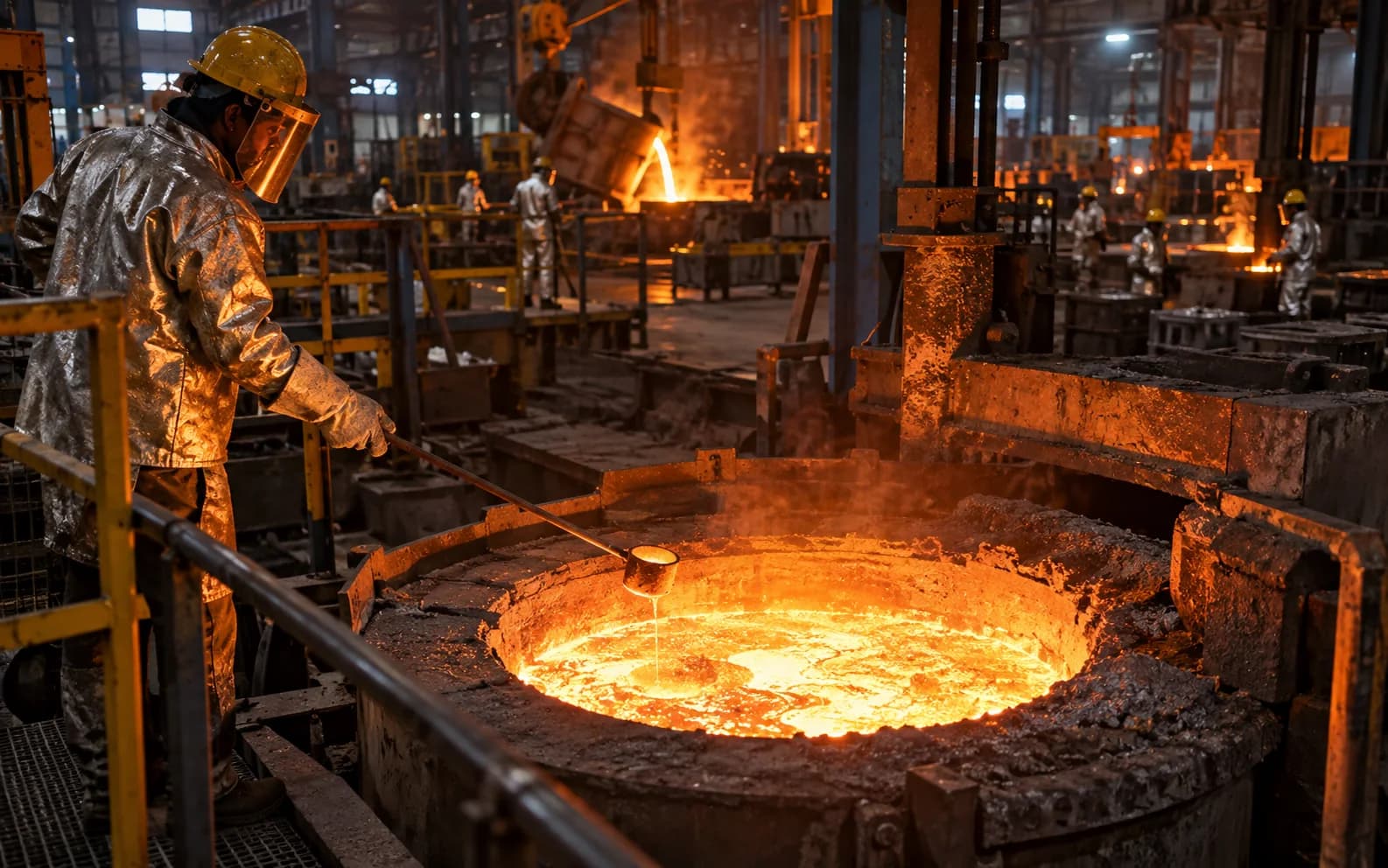
Induction furnace during a melt
01

Melting & Pouring

  • Induction melting for clean, repeatable heats
  • Chemistry verified before every tap
  • Pouring temperature controlled ladle by ladle
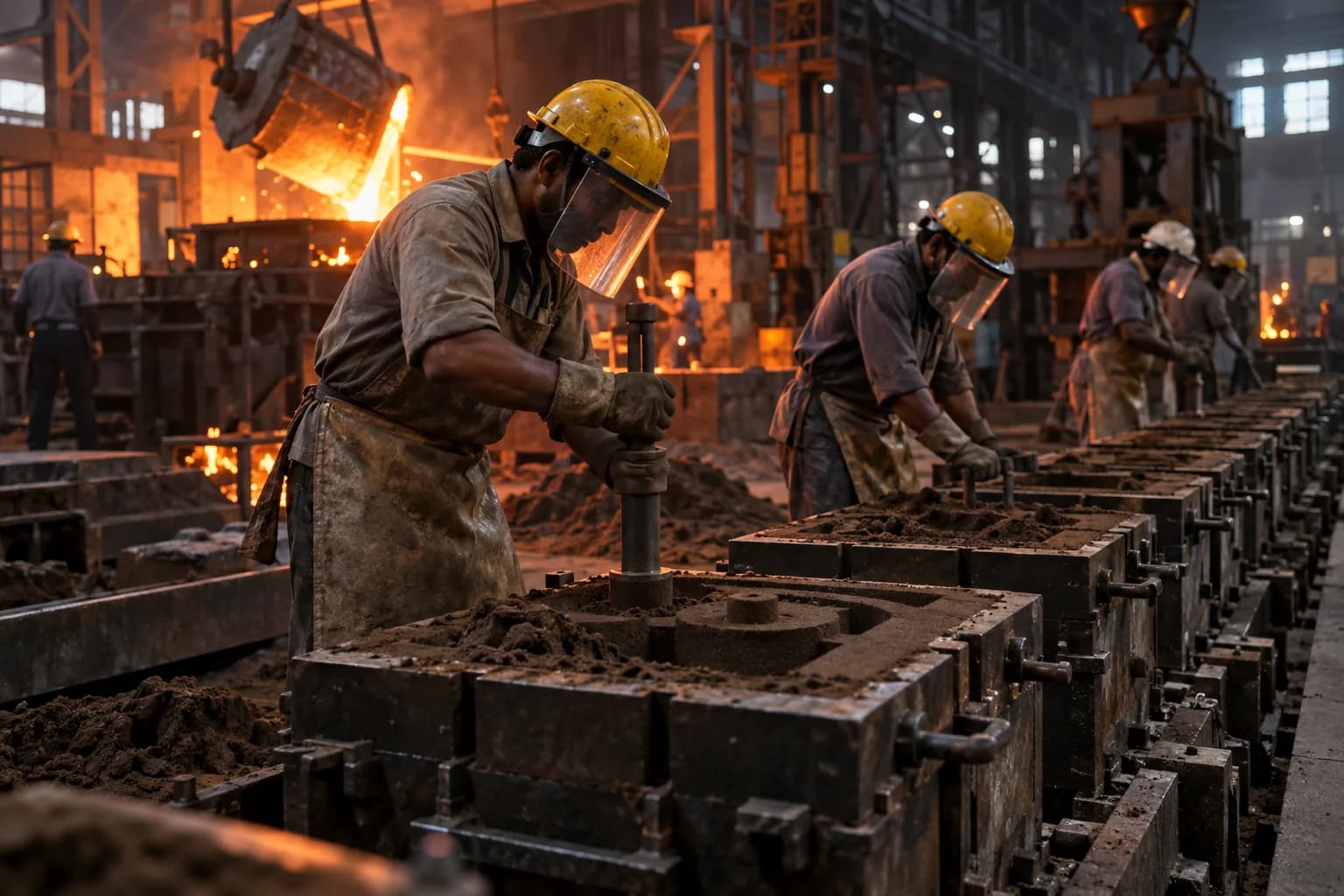
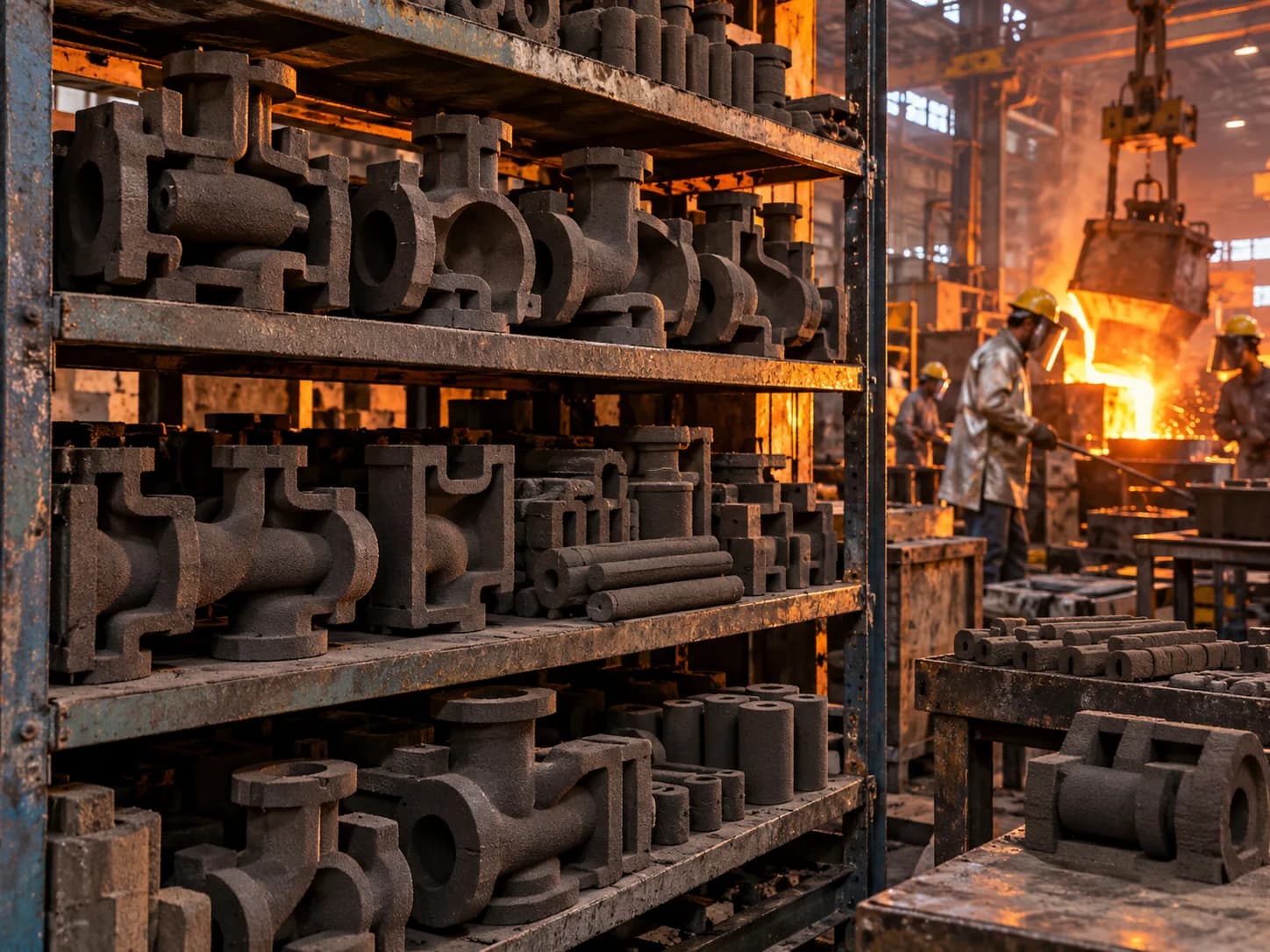
Moulds and cores ready for pouring
02

Moulding & Core Making

  • Green sand and no-bake moulding
  • Cores for complex internal flow passages
  • Sand reclaimed and reconditioned for reuse
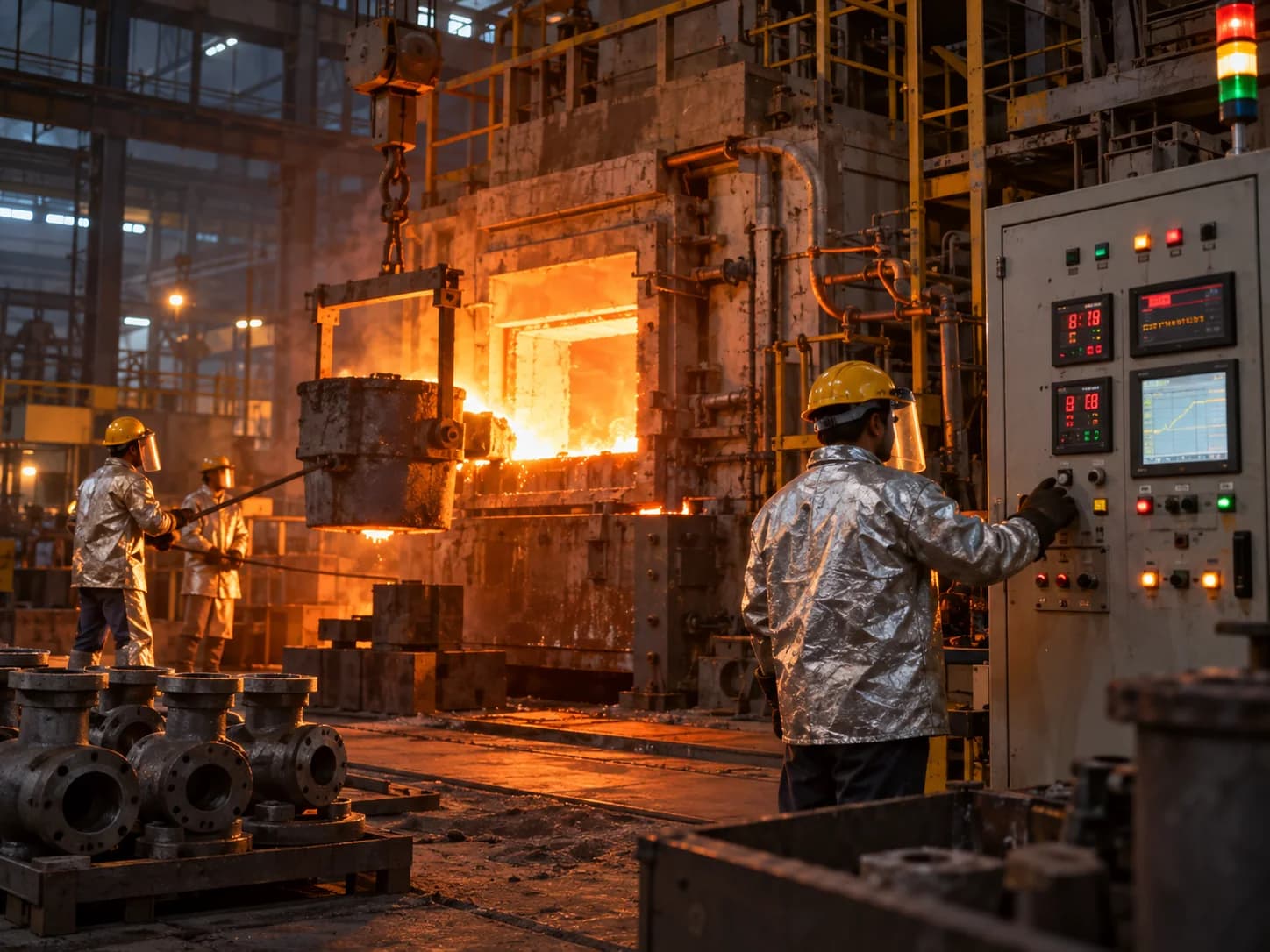
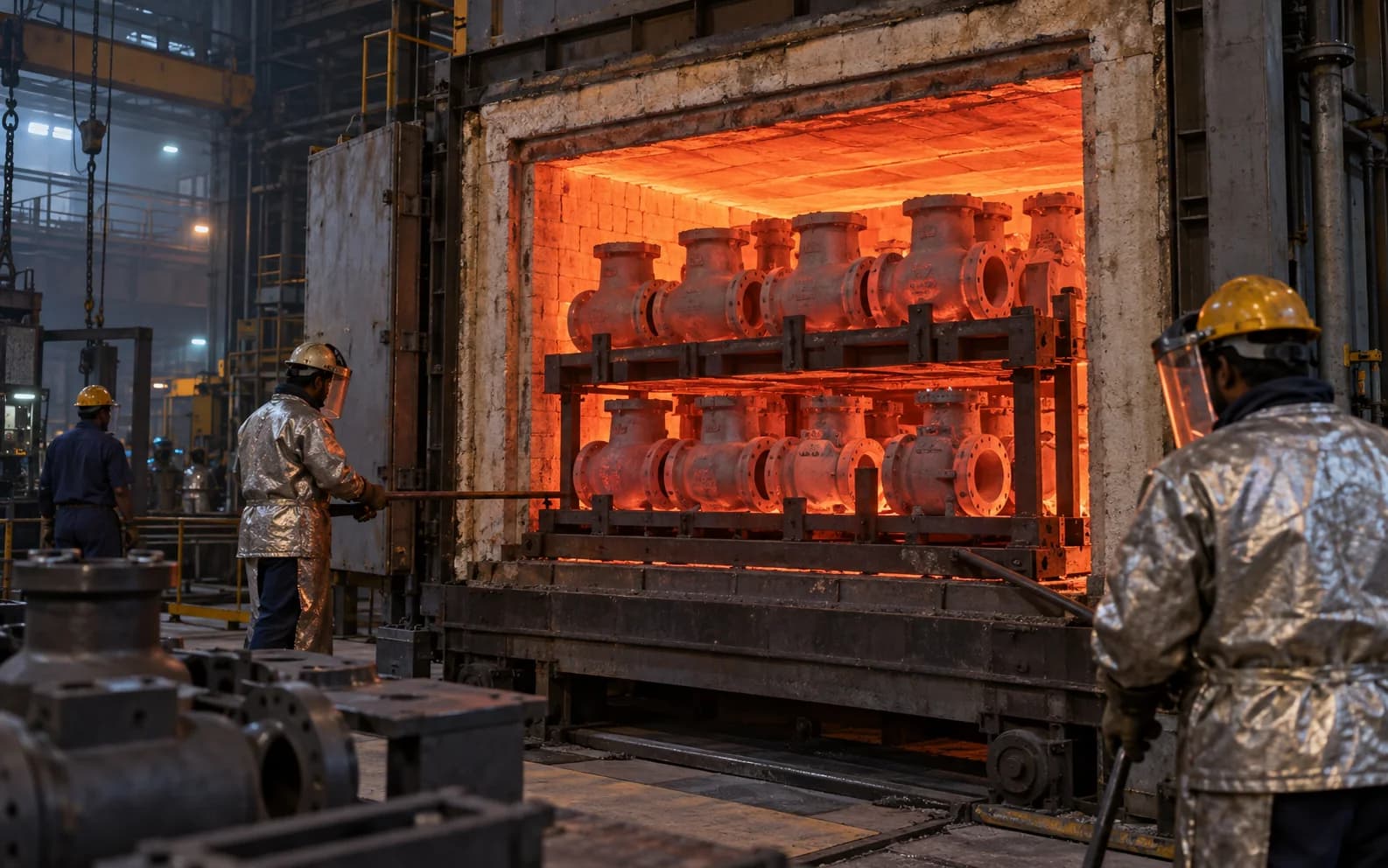
Castings loaded into the heat treatment furnace
03

Heat Treatment

  • Normalising, annealing and tempering by grade
  • Solution annealing for stainless and duplex
  • Furnace temperature records kept for each batch
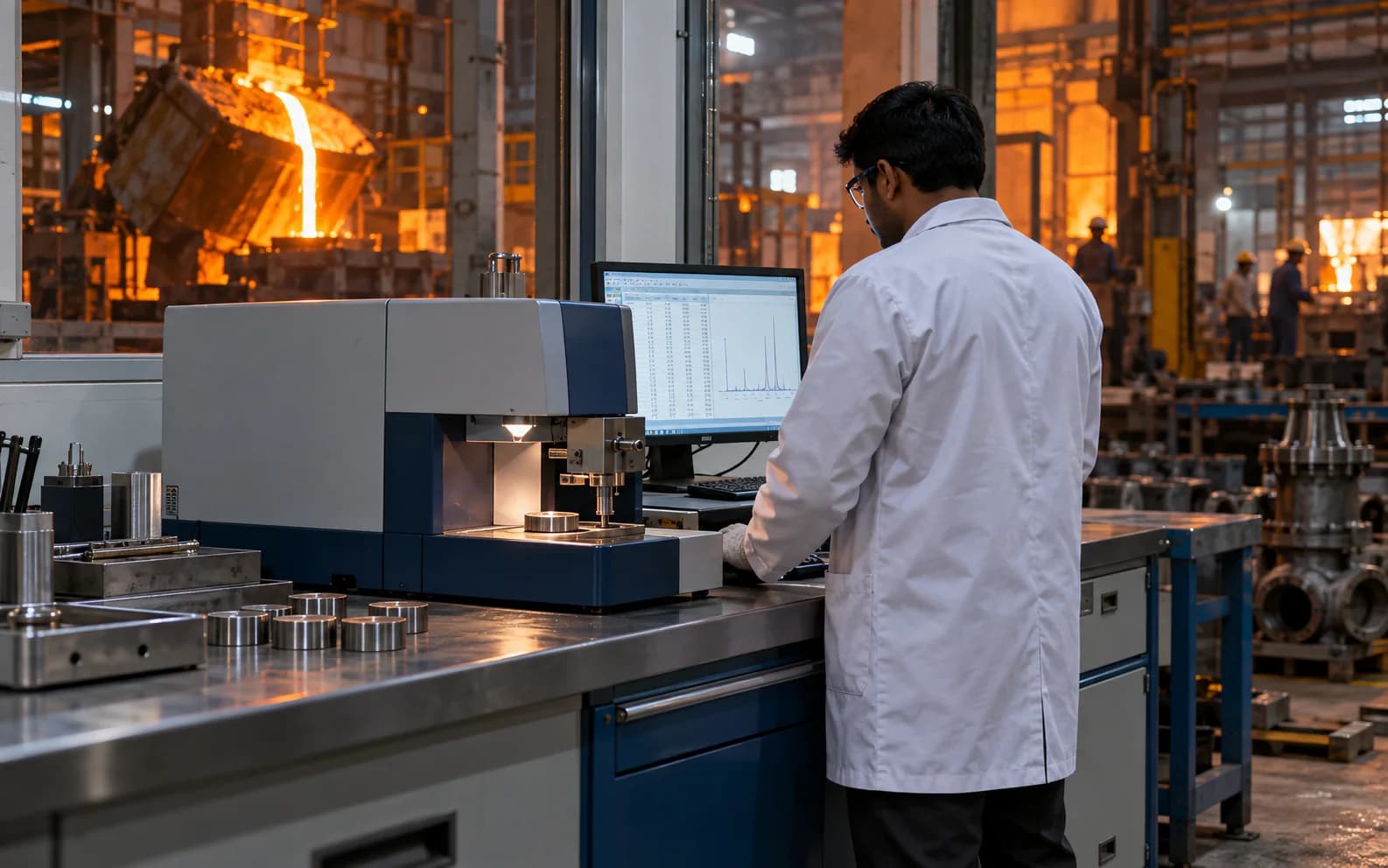
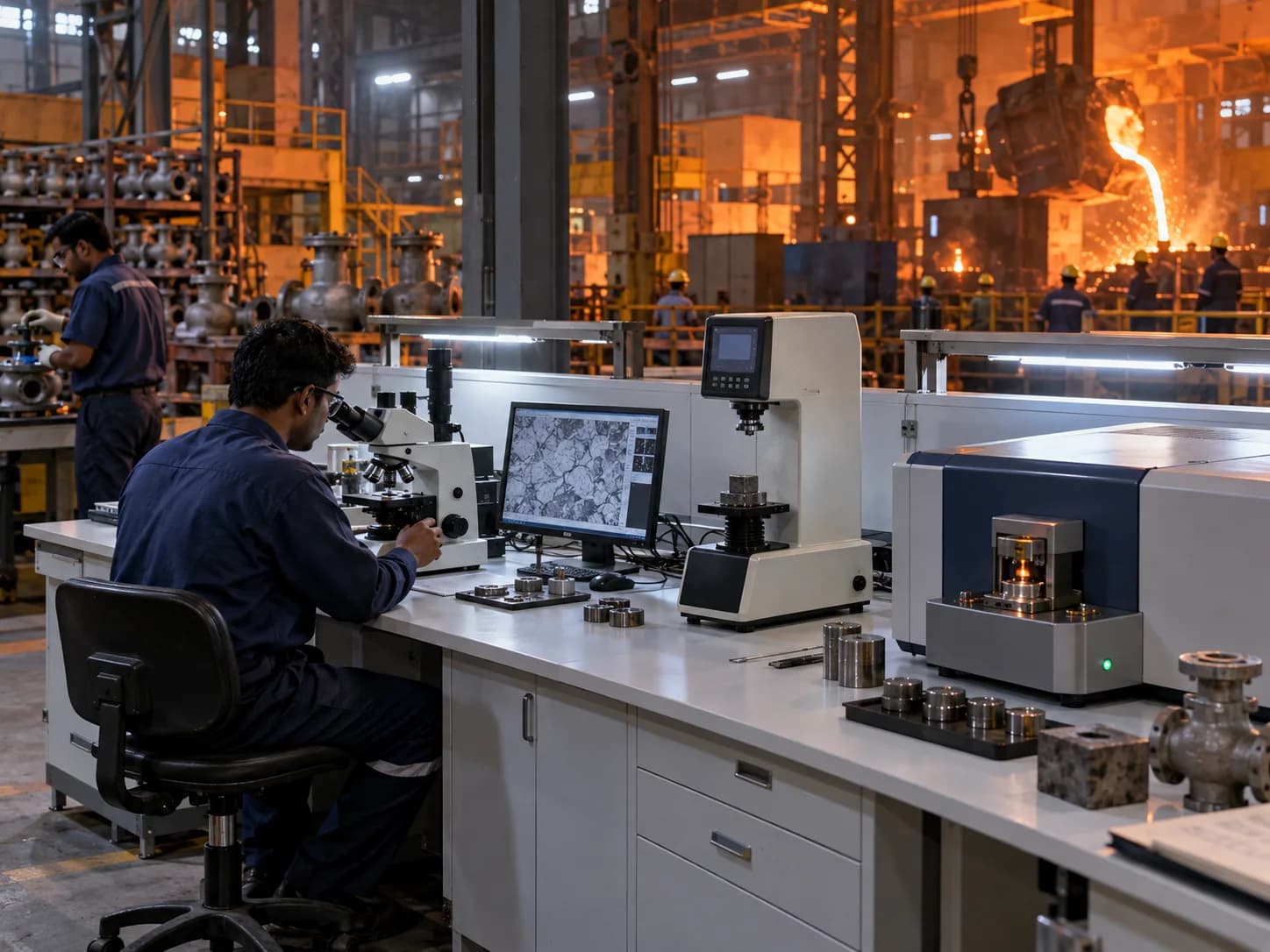
Spectro analysis in the foundry lab
04

Testing & Inspection

  • Spectro chemical analysis of every heat
  • Mechanical, hardness and microstructure checks
  • RT, UT, MT and PT as the specification requires
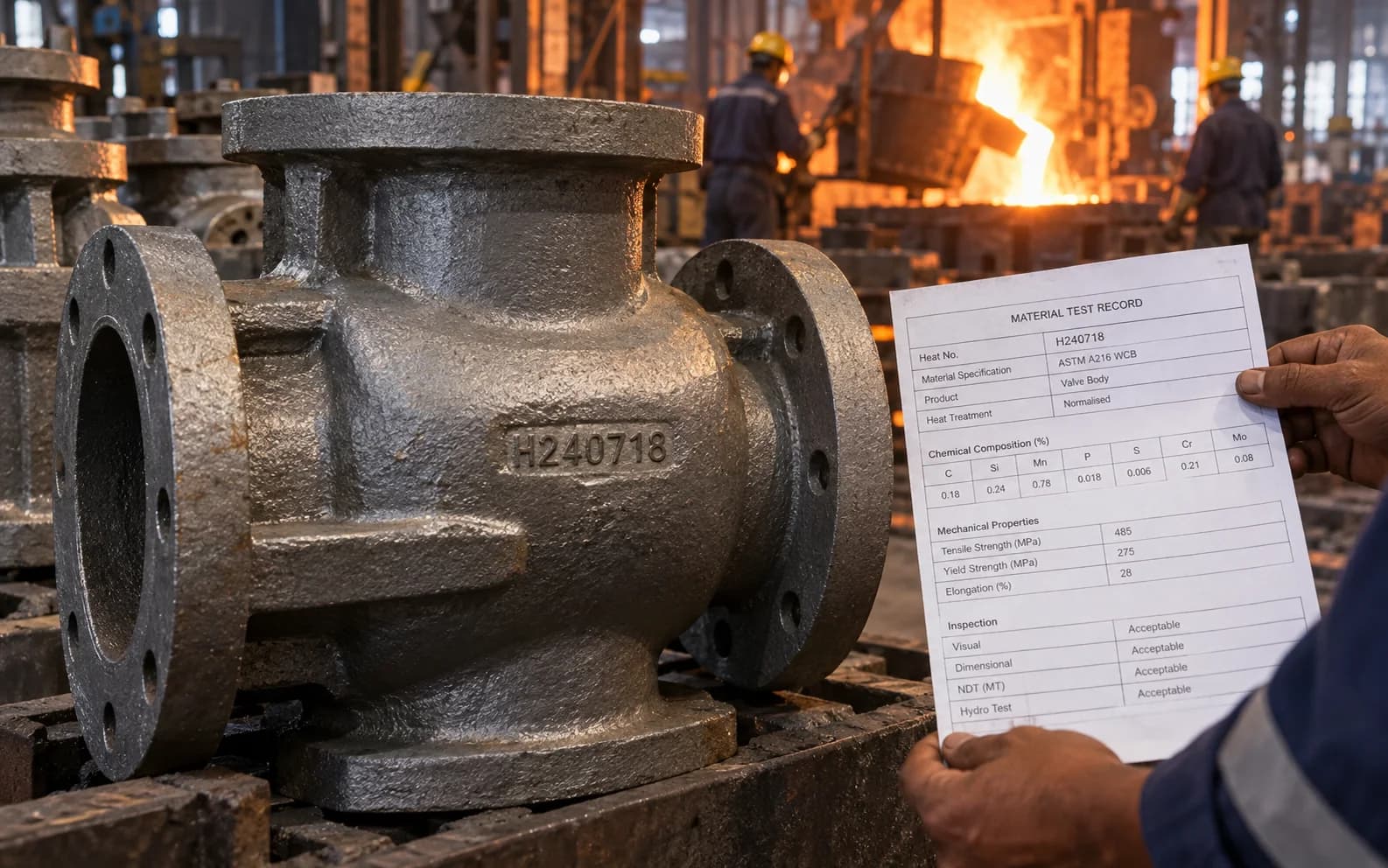
Heat number marked on a casting
05

Heat-Wise Traceability

  • Heat number identified on every casting
  • Test results linked through to the finished valve
  • Records retained digitally for audits
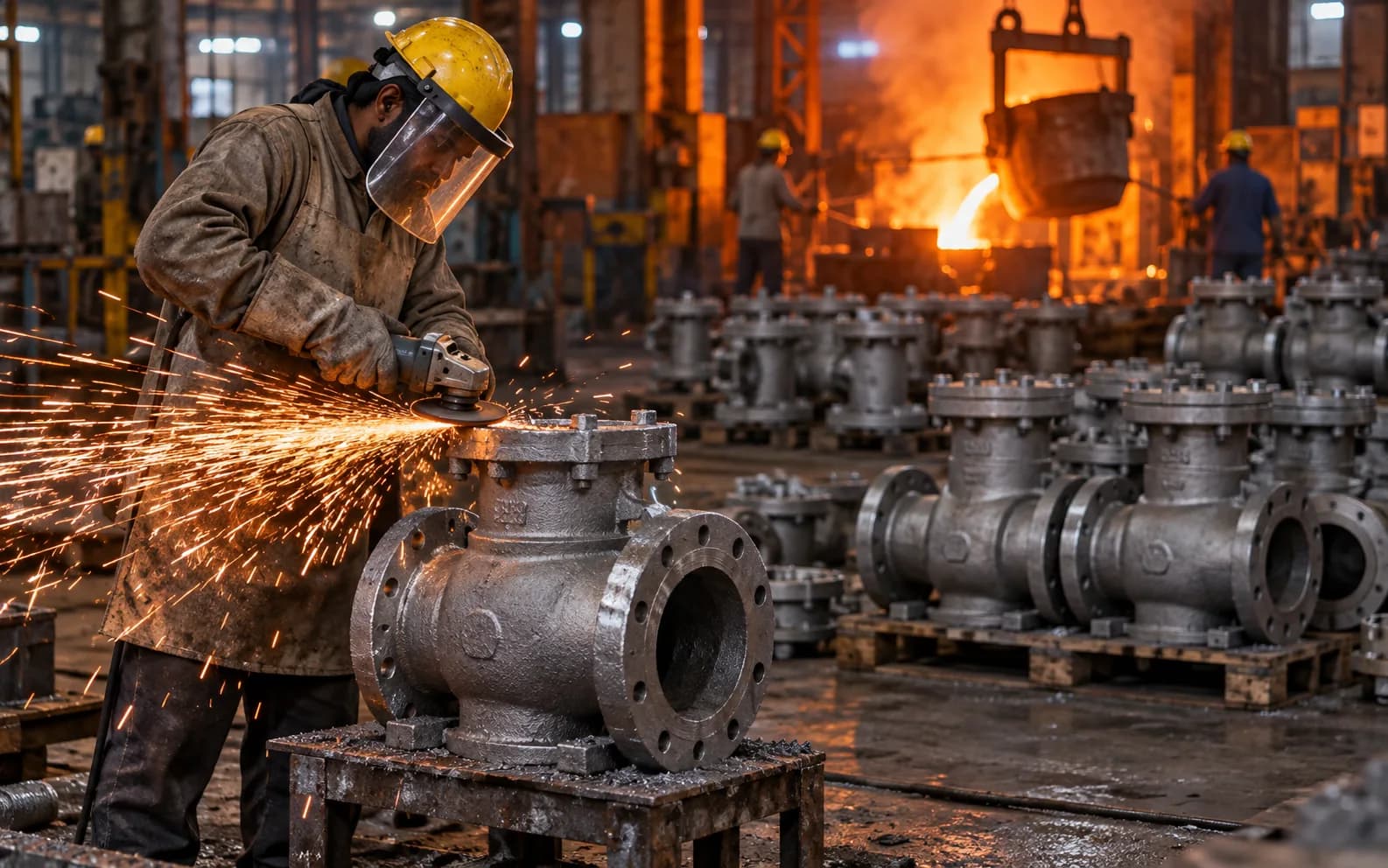
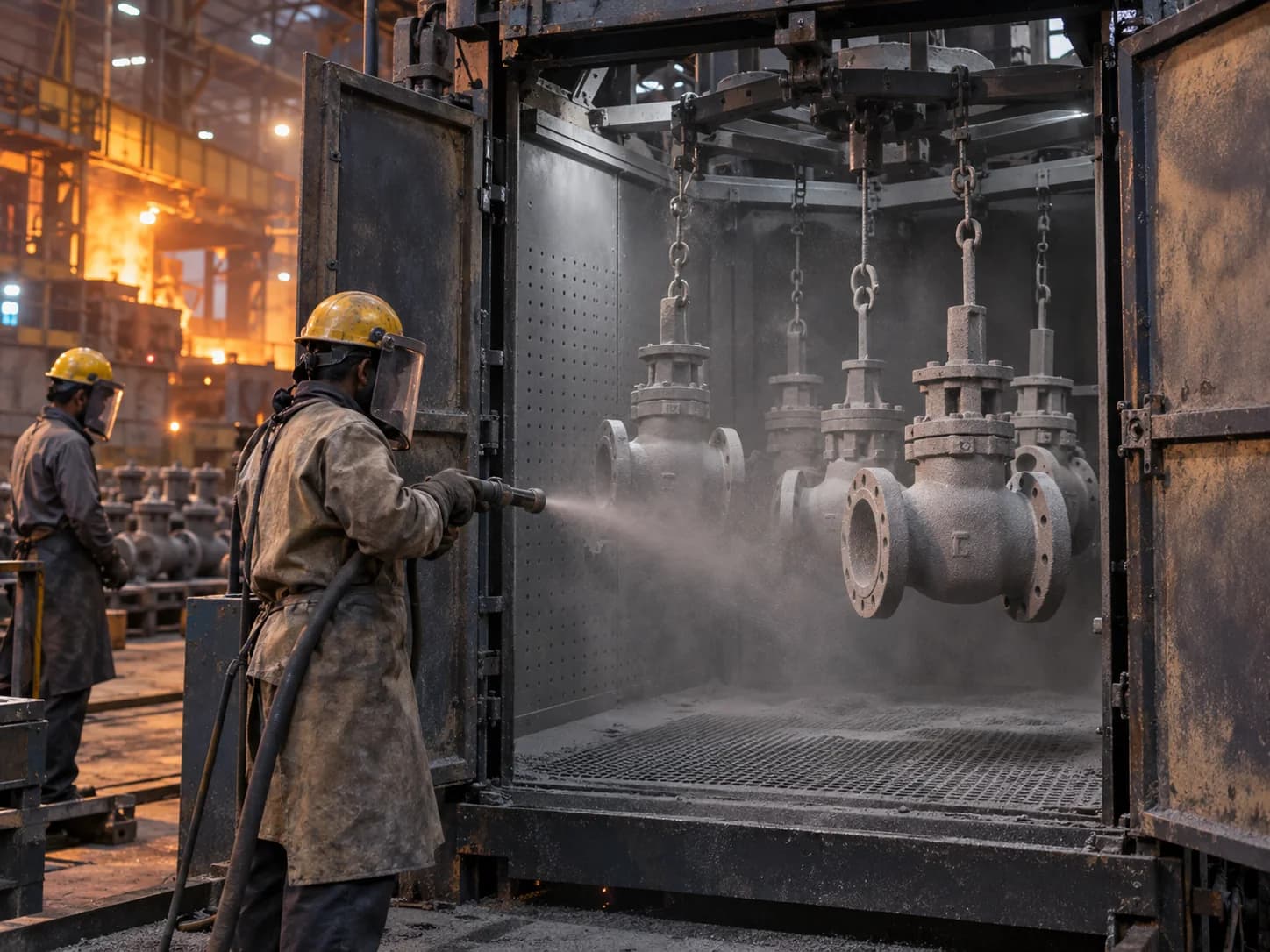
Fettling and shot blasting of castings
06

Fettling & Finishing

  • Gating removal, grinding and shot blasting
  • Dimensional check before release to machining
  • Visual inspection and dispatch clearance

Process Flow

From Pattern to Finished Casting

  1. 01Pattern

    Patterns and core boxes prepared for each valve size and class.

  2. 02Moulding

    Moulds and cores formed to hold tight dimensional tolerances.

  3. 03Melting

    Metal melted and its chemistry confirmed before tapping.

  4. 04Pouring

    Controlled pouring and cooling to sound, defect-free castings.

  5. 05Heat Treatment

    Heat treatment matched to the material grade.

  6. 06Fettling

    Castings cleaned, ground, blasted and checked.

  7. 07Inspection

    Testing and NDT before release to machining.
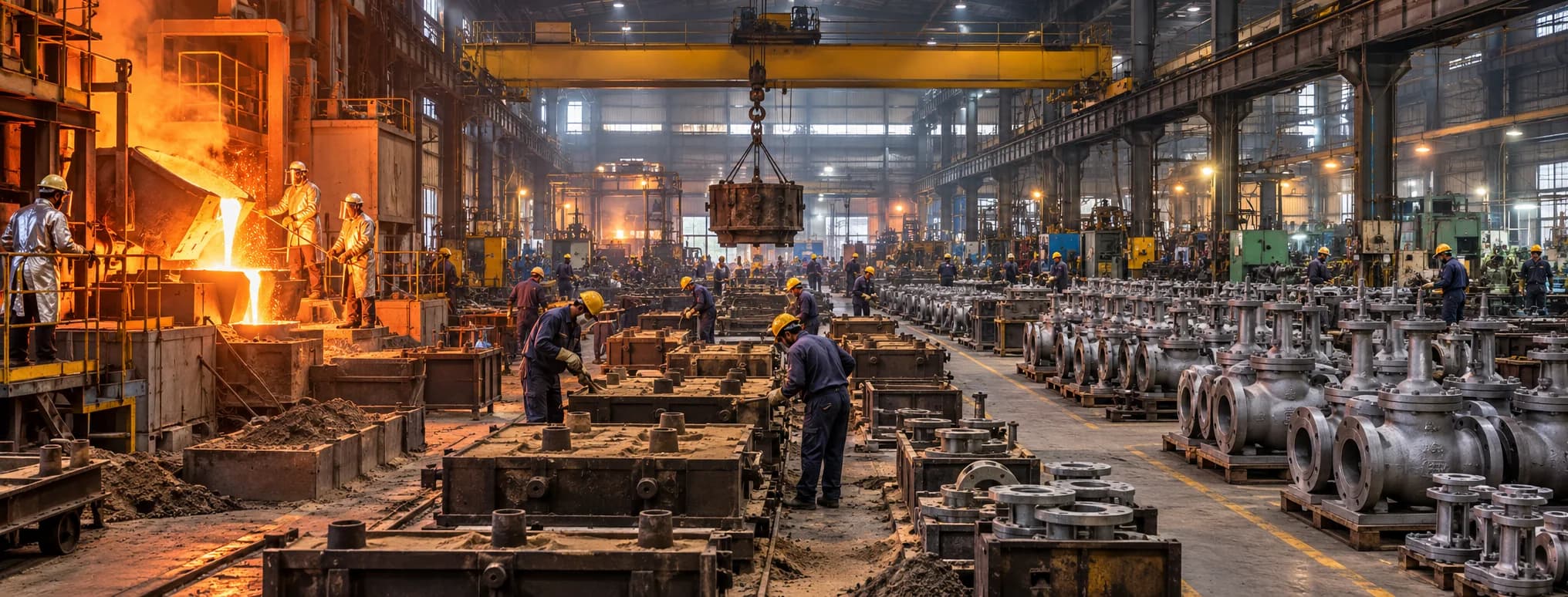
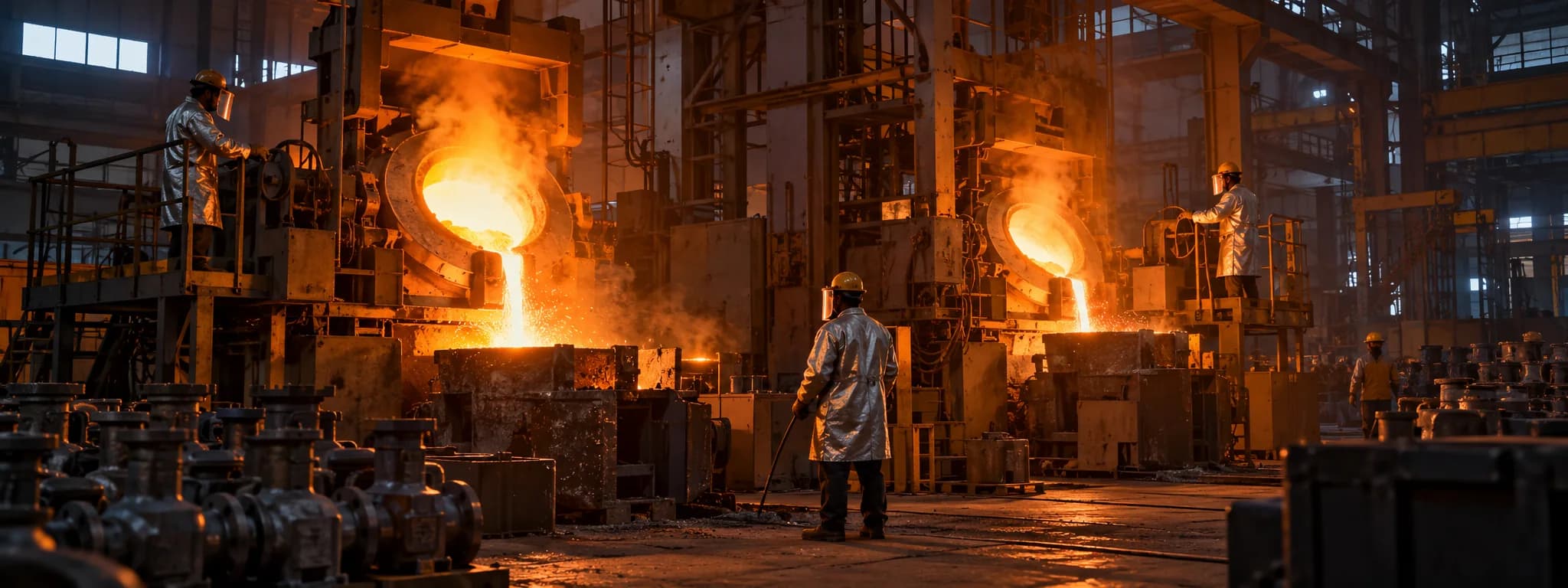
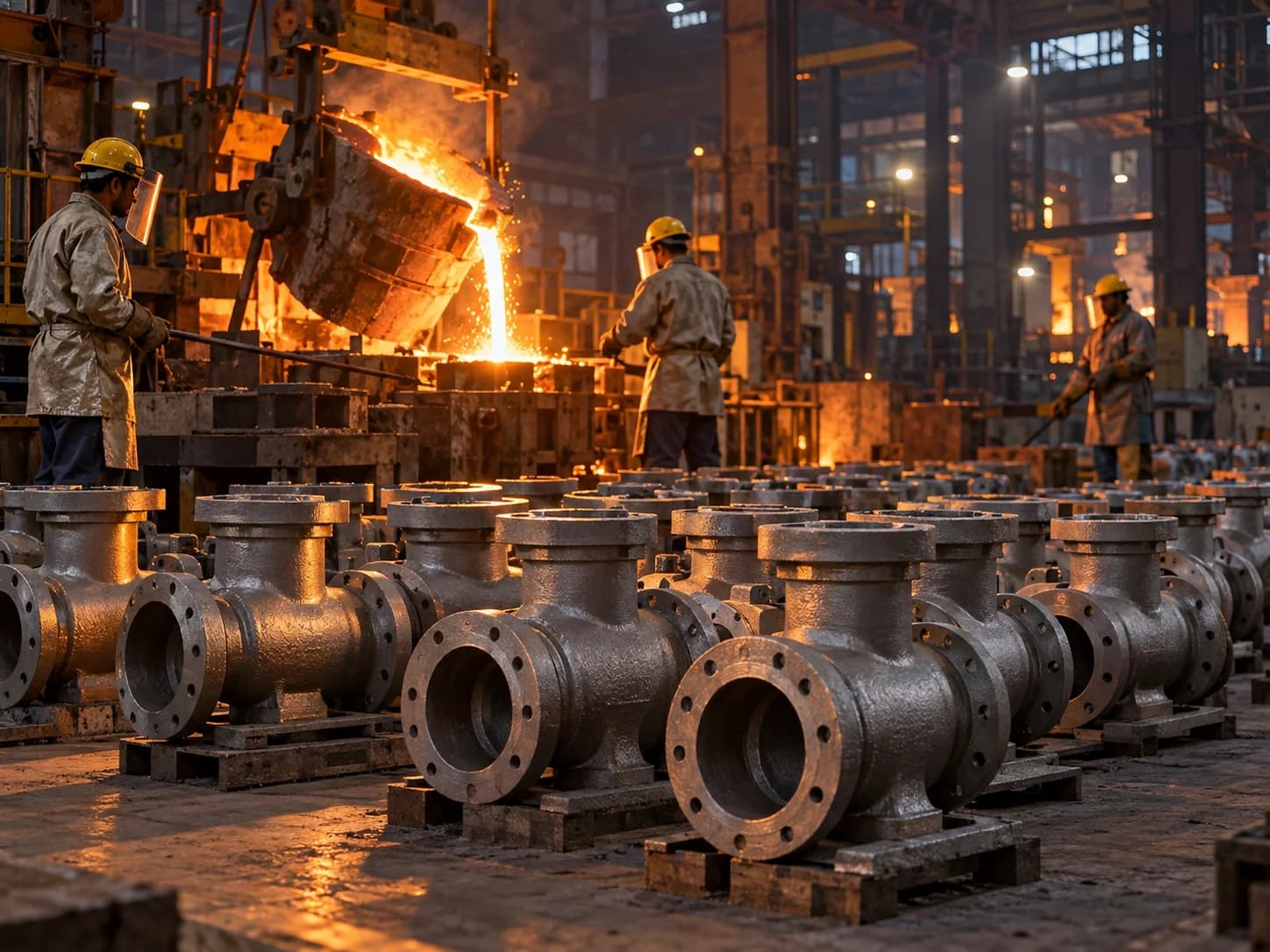
Wide view of the foundry floor

Metallurgy

Materials We Cast

The same grades listed in the FLOEC material chart, from everyday carbon steel to duplex, super duplex and Hastelloy for corrosive and critical service. Project-specific grades are developed on request.
Carbon Steel

  • WCB
  • WCC
  • A105 (forged)

Low-Temperature Steel

  • LCB
  • LCC

Alloy Steel

  • WC1
  • WC6
  • WC9
  • C12

Stainless Steel

  • CF8
  • CF3
  • CF8M
  • CF3M

Duplex & Super Duplex

  • CD4MCu
  • CD3MN
  • A890 1A–6A

High Alloys

  • Alloy 20 (CN7M)
  • Hastelloy B
  • Hastelloy C

Iron & Copper Alloys

  • SG / ductile iron
  • Cast iron
  • Copper alloys
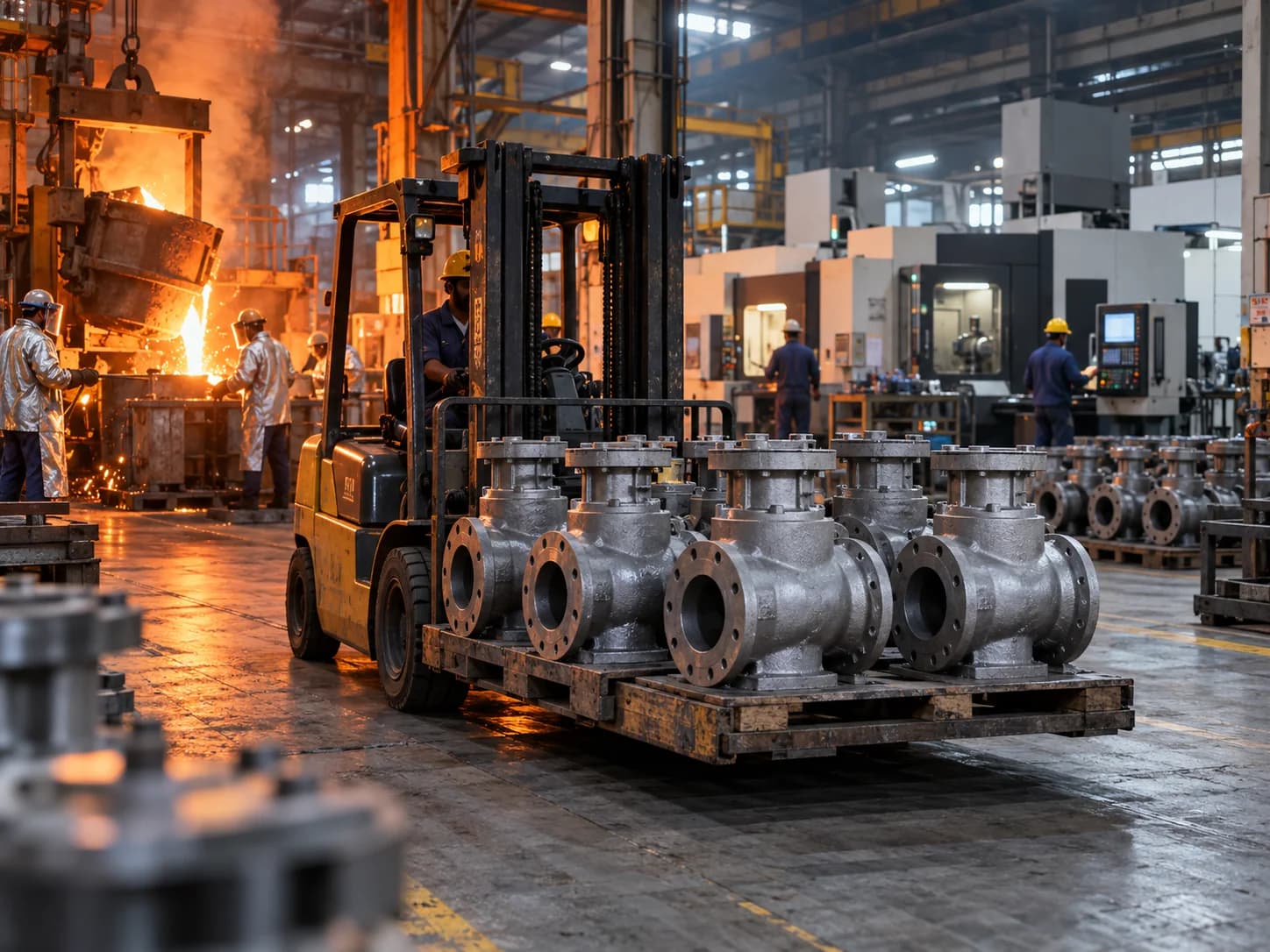
Castings moving from foundry to machine shop

Why It Matters

Why an In-House Foundry?

Shorter lead times

No waiting on outside foundries — castings move straight from our pour to our machine shop.

Quality from the first pour

Chemistry, heat treatment and soundness are controlled by the same team that answers for the finished valve.

Special grades on demand

Duplex, super duplex and high-alloy castings developed for project specifications without third-party delays.

One point of accountability

From melt to dispatch, every step is ours — one supplier, one set of records, one responsible team.

Applications

Castings for Critical Service

  • Oil & Gas
  • Petrochemical
  • Power Generation
  • Chemical Processing
  • Water Treatment
  • Steel & Metals

Project Enquiry

Need Valves in a Special Grade?

Share the material, size and pressure class. Our team will confirm casting feasibility and lead time.